Home / Industries / AI liquid cooling
Application · Liquid cooling hardwareFittings for AI server liquid cooling loops.
Rack densities keep climbing and air has stopped keeping up. Liquid moves the heat away efficiently — but every joint in that loop is a potential leak, and the sealing geometry is what decides whether it holds.
What we machine for these assemblies
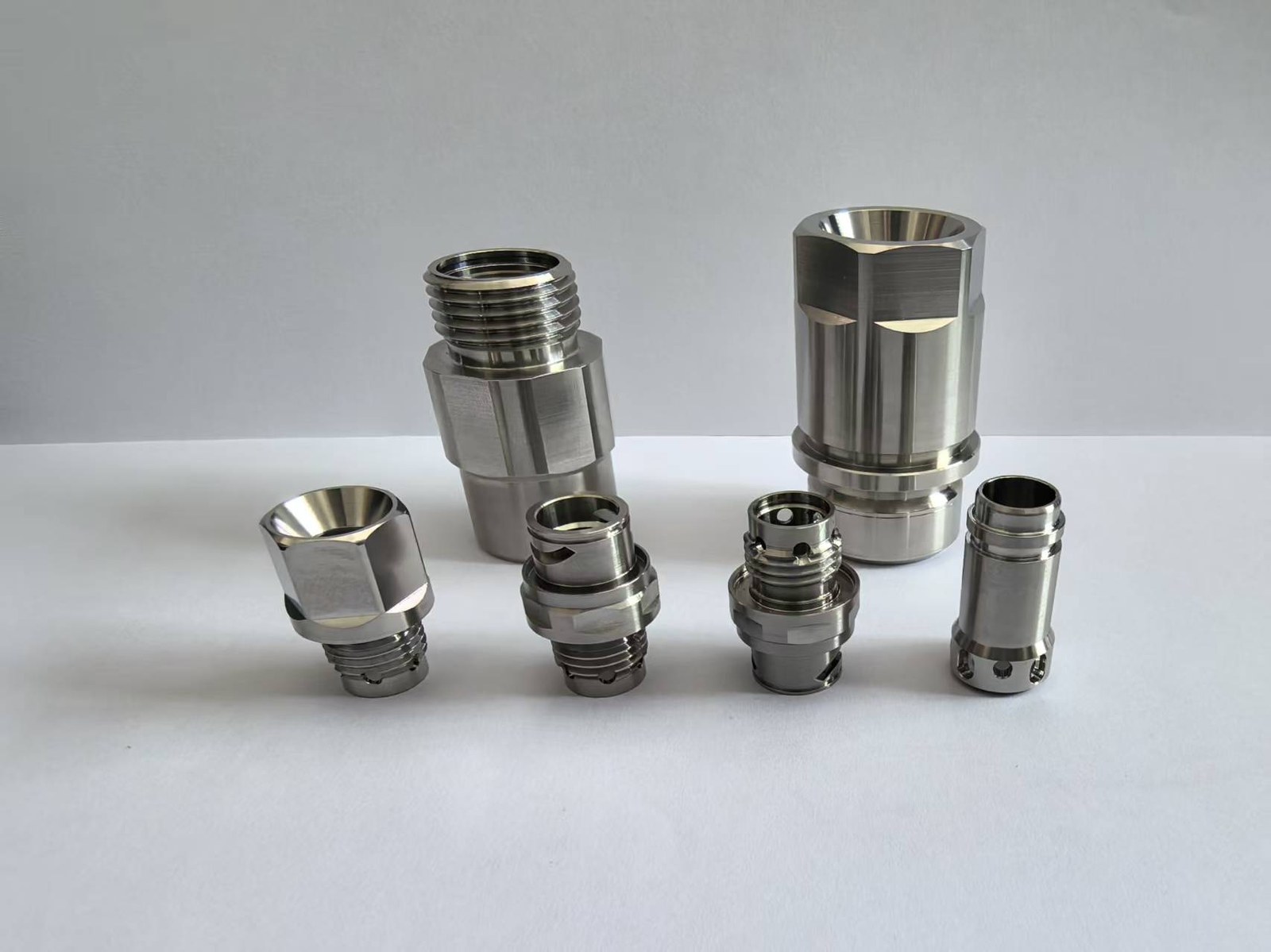
Small turned components that sit inside cold-plate and manifold assemblies:
- Quick-disconnect coupling bodies and inserts
- Manifold ports, tube stubs and reducer spigots
- Sensor bosses, bleed valves and blanking plugs
- Threaded collars and retaining nuts for hose terminations
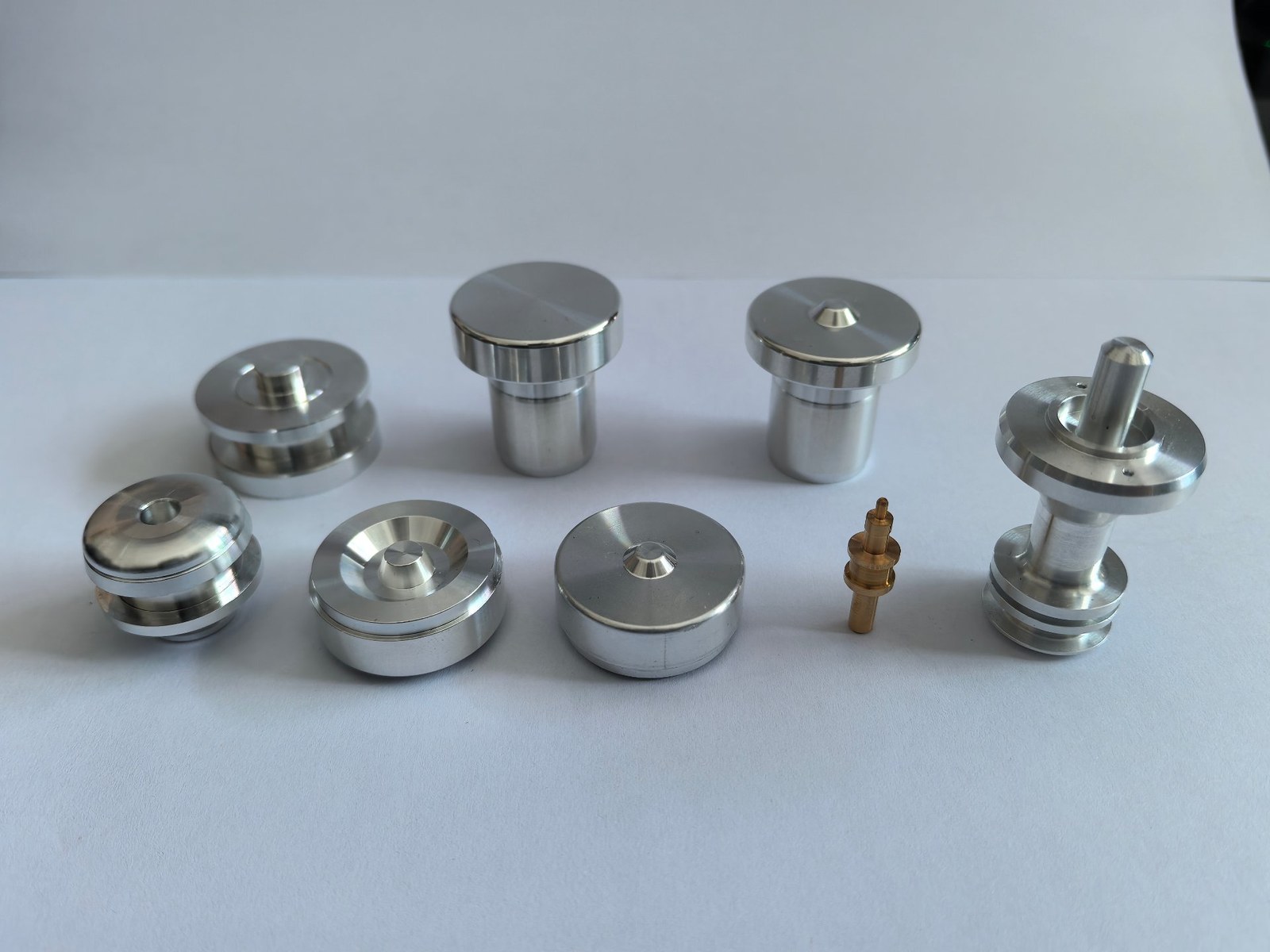
The parts below are typically run in 316L stainless steel for coolant compatibility, though we regularly turn brass, tin bronze and aluminium for the same assemblies.
Where the leak risk actually sits
Four features decide whether a turned fitting seals, and they are all features a sliding-headstock lathe is naturally good at holding:
Sealing diameter
Out-of-round or tapered sealing surfaces give the O-ring an uneven squeeze — the most common source of a slow weep after thermal cycling.
Thread concentricity
If the thread does not run true to the sealing diameter, the coupling seats crooked and loads the seal unevenly as it is tightened.
Surface finish
A sealing face that is too rough leaks; too smooth can be equally unhelpful for elastomer grip. Repeatable Ra matters more than a single polished sample.
How we hold it in production
| Requirement | Our capability |
|---|---|
| Bar diameter | Ø3.0 – 32 mm |
| Turned diameter tolerance | ±0.005 mm held at Cpk ≥ 1.33 in production |
| Concentricity-critical features | Machined in the same setup on 6-axis sliding-headstock lathes |
| Cross-holes, side ports, flats | Live tooling and B-axis indexing, no second handling |
| Material traceability | EN 10204 3.1 certificates |
| Volume | 19 machines running 24/7, 13,680 spindle-hours per month |
Deburring, cleaning and the rest of the secondary operations are listed on the capability page. Inspection is described on the quality page.
Send us the drawing
A STEP file and a dimensioned PDF with GD&T is enough to quote. Tell us which surfaces the seal sits on and what roughness you need there — that lets us plan the operation order before we cut metal rather than after.
Quotation returned in 48 hours with DFM notes. Mutual NDA signed before drawings are exchanged, on request.